Beat the Heat | Unite campaign for a maximum working temperature

Unite is calling for a legal maximum working temperature
Unlike in Spain, Germany, Greece or Hungary, there is currently no legal maximum temperature for working in the UK. While many people may welcome hot weather, there can be serious health risks for people working when it is too hot.
High temperatures can create serious health and safety risks in the workplace. Whether working in or outdoors, excessive heat can lead to heat stress, dehydration, fatigue, reduced concentration, and even life-threatening heat stroke.
Unite and the TUC are calling for the Health and Safety Executive to urgently review and update guidance to introduce maximum workplace temperature guidelines meaning:
Employers should take steps to reduce temperatures if they get above 24°C and workers feel uncomfortable.
Workers can stop work above a maximum temperature of 30°C, or 27°C for those doing strenuous jobs.
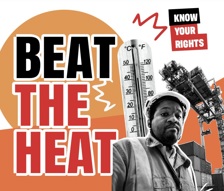 There is a minimum so why not a maximum?
The HSE’s code of practice setting out that the temperature in a workplace should normally be at least 16 degrees Celsius. With the UK experiencing four heatwaves last summer that led to amber warnings, there should be maximum working temperatures.
Back the Unite call for a maximum temperature and ask your employer to adapt to the risks or the heat being too high at your workplace. .
What you employer must do
Your employer has a duty of care to you
Health and safety legislation does state that during working hours the temperature in all indoor workplaces must be ‘reasonable’.
What your employer should do
Employers should actively monitor conditions and introduce practical measures to protect workers during periods of hot weather.
Recommended controls include: Monitoring workplace conditions; adjusting working hours; increasing rest breaks and periods; improving cooling; providing drinking water; reviewing workplace policies; providing sun protection to outdoor workers; slowing work rates; and adequate safety training.
Every worker has the right to a safe working environment, and workers should never be expected to continue working where excessive heat presents a serious risk to health and safety.
What reps can request
Unionised workplaces are safer and healthier than non-unionised workplaces.
Work with your employer and management to regularly review conditions and processes with management on site/location.
Encourage any other workers not in the union to join Unite.
What reps can do
The fist step is to negotiate a Working In Extreme Weather Agreement with the employer.
Other actions can include:
Conduct a safety check
Draw up a checklist that workers can fill out ahead of any higher risk tasks
Request general risk assessments and agree hazards etc
Negotiate a stop unsafe work procedure
Regularly review the conditions and process with management
Stopping work when it gets too hot
There may already be an agreement with your employer which sets a maximum temperature or a procedure for stopping when it gets too hot. If you don’t have one, and the union is recognised, then seek one.
Several factors can influence the heat load on the body. These include: air temperature; radiant heat; humidity; air movement; the level of physical work; and the amount and type of clothing being worn. Review these risk controls and consider responses.
At the end of the day, remember that every worker has the right to a safe working environment, and workers should never be expected to continue working where excessive heat presents a serious risk to health and safety.
Although there is no legal maximum workplace temperature in the UK, employers still have clear responsibilities under the following, make sure they are adhering to:
The Workplace (Health, Safety and Welfare) Regulations 1992, which require indoor workplaces to maintain a reasonable temperature during working hours.
The Health and Safety at Work etc. Act 1974, which places a duty on employers to protect employees' health, safety and welfare.
The Management of Health and Safety at Work Regulations 1999, requiring employers to assess workplace risks and implement suitable control measures.
Want to know more - click for more details
Check out the TUC’s Temperature inspection checklist for safety reps
Use the HSE workplace temperature checklist and carry out an assessment