|
Message from the General Secretary:
Merry Christmas and thank you for everything you do as a Unite Rep
|
Friends, since being elected to serve as your General Secretary, together we have delivered much needed change.
We have taken Unite back to the workplace.
We have investigated allegations of wrongdoing and corruption from the past.
And we have ended the practice of giving blank cheques to Labour.
Through your determination, the Union’s new direction has started putting more money into our members' pockets.
Since I was elected General Secretary in August 2021, more than £620 million has been won for members from successful disputes alone.
83% of disputes have been won.
Even more has been delivered by you, through everyday negotiations with employers, across our nations and industries.
I am determined to continue that change – putting the workplace first.
We will continue to add to Reps' tools like forensic accounts and the Pay Claim Generator, to ensure resources are focused on the frontline.
This year also saw the release of our interim report from Project Clean Up. When I was elected, I promised Unite Reps that I would leave no stone unturned and investigate the truth behind allegations of wrongdoing and corruption in the past.
I take no pleasure in saying that it has been an extremely difficult process and quite frankly an ugly one.
The report makes clear that we were overcharged £30 million for the Birmingham hotel development.
Historical allegations of financial wrongdoing regarding our affiliated services are being investigated by the Police.
The scorched earth strategy adopted by some who did not want to uncover the truth disgusted me.
It did not deter me, and I will ensure that we do everything possible to uncover the whole truth and get our money back.
|
|
|
This year has seen Unite lead in the political arena, holding the Government’s feet to the fire.
The time of blank cheques for Labour from Unite is at an end.
Our Reps and members expect their money to be spent on their jobs, pay and conditions, not on political game-playing.
Unite has made it very clear to the Government that they are supposed to be the voice of workers.
There cannot be a jobless transition in the name of Net Zero or AI.
There must be investment in our public services and third sector.
And it’s time to make the super-rich pay for the crisis they created, not everyday workers.
Unite’s political fund is now being used to campaign on our members' issues.
Defending jobs, pay and conditions in both the private and public sector.
Finally, I want to thank you again, our Reps, for everything you do.
Unite would be nothing without you.
And as your General Secretary, I will continue to fight for our members and make sure the voice of workers is heard loud and clear.
Thank you for being Unite.
In solidarity,
Sharon
|
|
|
|
Included in this month’s Work Voice Pay
|
|
|
|
- RPI is high at 3.8%, with food profiteering still an issue
|
|
|
- Even a below-inflation minimum wage rise scares bosses
- Labour's new stealth tax will affect at least 3 million workers and may also lead employers to reduce pension contributions
- We can see that wielding our own power - by taking collective action for our fair share - leads to real-terms gains in pay
|
|
|
|
- Investment is not keeping pace with payouts to shareholders
|
|
|
- This month's wins include GFM, Arriva and First
- Unite members at employers including Sellafield, BAE Systems and VUE Cinema are taking industrial action in December and January
|
|
|
- We held our first Facts & Figures run-throughs last month
|
|
|
|
|
|
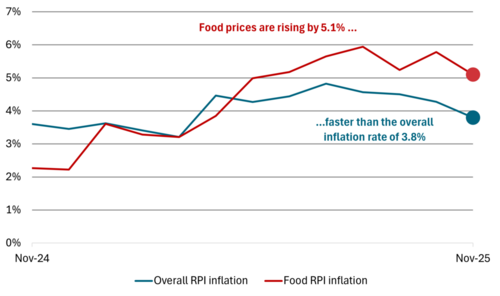
RPI is high at 3.8%, with food profiteering still an issue
|
The higher the price inflation, the more pay needs to increase to keep up with prices. Overall inflation is 3.8%. Food inflation is even higher at 5.1%. This cuts hard into workers' living standards. But not supermarket profits: Tesco and Sainsbury's expect to make £4 billion this year. Do they think we can't see the link?! In the last five years, food prices have gone up by a whopping 38%.
|
|
|
|
|
|
|
|
Even a below-inflation minimum wage rise scares bosses
|
It's that time of the year again when there is likely to be a tiny increase in minimum wage, and you can already see some bosses spreading the horror stories of a doomed economy!
Chancellor Rachel Reeves announced a 4.1% rise in the National Living Wage (NLW), taking it from £12.21 to £12.71. It would lift the salary of a minimum wage worker on a 40-hour week from over £25,000 to over £26,000.
|
|
|
On paper, that may sound like progress — but it still lags behind inflation, and for millions of workers struggling with rising rents, energy bills and food prices, it barely scratches the surface. Even this new rate doesn’t meet the real cost of living. RPI has been running above 4% for months, and if it remains high next year, a 4% increase means another year of falling living standards for the lowest-paid.
Even the possibility of this modest increase, however, was enough to scare city executives. They have warned that a higher minimum wage might “distort pay structures” by bringing it closer to the wages of graduate-level employees. That’s rich! The same bosses who refuse to pay graduates a decent wage now claim that paying their lowest-paid staff fairly is somehow a threat to the labour market.
These howls of anguish from city bosses do, however, reflect a real emerging pattern: the gap between what a new graduate earns and what someone on the minimum wage earns is narrowing. Pay levels for all workers, including graduates, are being squeezed, and that more bargaining power is needed to push up starting salaries and improve conditions, rather than leaving that to the bosses.
Another scare story is about how increases to the minimum wage for young workers will actually hurt them. Some employers have even complained that the minimum wage for under-18s and 18– to 20-year olds is getting “too high”, and that the risk/benefit ratio stops them hiring. For them, the only way a business model can work is by underpaying young people. This is a shameful confession of exploitation.
It didn't take long for the usual claims to be made that wage rises will fuel higher prices for customers. Sainsbury’s boss Simon Roberts said “supermarkets already work with tiny profit margins and extra costs have to go somewhere.”
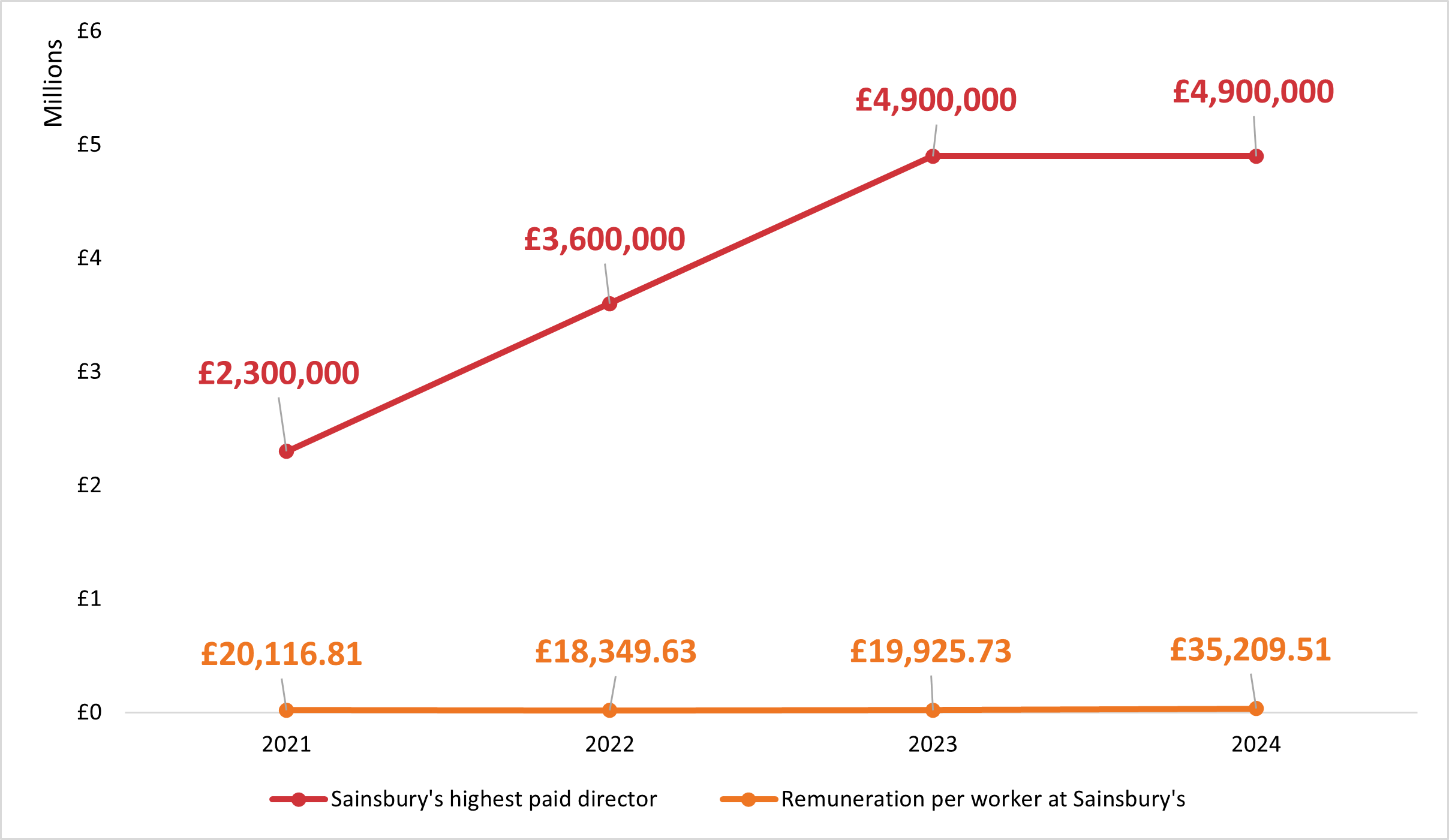
Let’s not forget where the money goes when employers refuse to pay their workers properly: into profits, shareholders’ pockets, or enormous CEO payouts. The same Simon Roberts was paid almost £10 million for the past two years for delivering massive profits, while shoppers face soaring food prices. The argument that there isn’t enough to go around simply doesn’t hold up.
There is enough money, it’s just not being shared fairly.
|
|
|
Unite believes that wages should be determined through collective bargaining. They must not be left to government legislation or the goodwill of employers. Whether a pay rise comes from Westminster legislation or an employer’s “voluntary” gesture, it's never as secure as a union-negotiated deal.
Governments come and go, and with the stroke of a pen, a new administration can roll back rights and cut pay. But a strong collective agreement, won and enforced by organised workers, cannot be taken away so easily. Our power at the bargaining table is the only lasting protection for jobs, pay and conditions. The stronger our unions in each workplace and sector, the fairer the pay we negotiate and win.
|
|
|
|
|
|
Labour's new pensions stealth tax will affect at least 3 million workers and may also lead employers to reduce contributions
|
Labour refuses to seriously tax the rich and powerful. Rather than focusing on the wealthy that keep getting fatter off our hard work, Labour has chosen to target an ever increasing number of ordinary working people.
Read this month's article on how tax changes to salary sacrifice announced in the Budget last month will directly impact 3.3 million workers. And that figure is likely to increase.
More people are likely to be caught by these changes as their pay increases with inflation. Please contact us about how you think you will be affected, particularly if your employer has already advised of possible changes.
|
|
|
|
|
|
|
|
Investment is not keeping pace with payouts to shareholders
|
Cost of living pressures? Not for shareholders! Tesco has paid out £13 billion to shareholders since the cost of living crisis began.
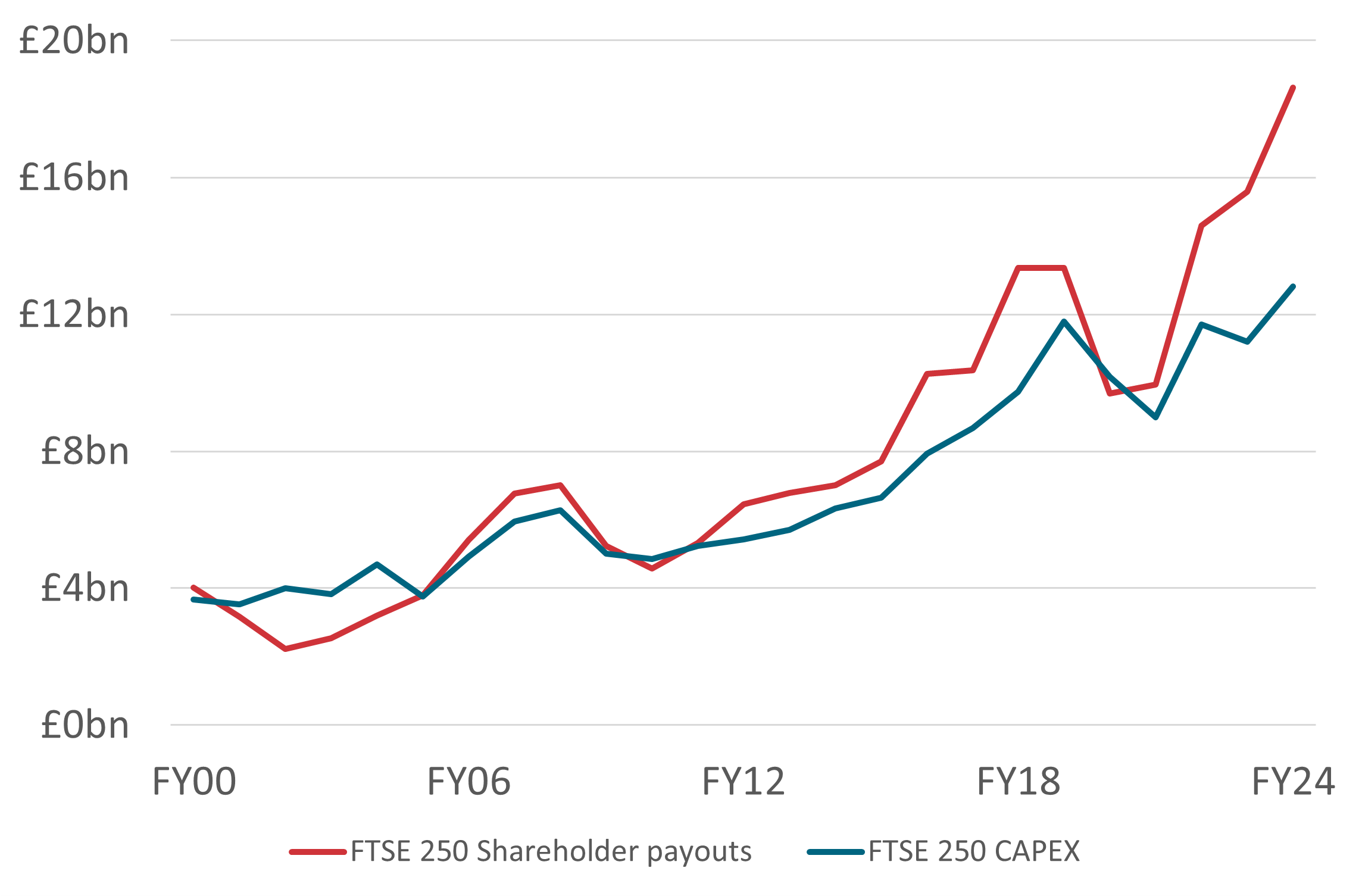
Our analysis of companies across the FTSE 250 shows that capital expenditure (aka investment) has not kept pace with payouts to shareholders. They pocketed nearly £19 billion last year alone. It also shows a clear trend of shareholders taking more of the spoils than are being reinvested in companies or going to workers.
|
|
|
|
|
|
|
|
|
|
|
|
Bargaining wins at GFM, Arriva Leicestershire, First Aberdeen, and others add to the £620 million already in workers' pockets since 2021
|
Collective bargaining remains the most powerful tool we have to improve pay, terms and conditions. Below are the latest victories secured through the collective power of Unite members over the last month:
- GFM workers won up to 15% pay rise, improved conditions, and a recognition agreement following numerous strikes.
- Arriva Leicestershire strikes off after Unite wins 6.5% pay rise. First Aberdeen over 300 drivers secured an increase of 5.3% eight months ahead of schedule. Welsh bus workers at First Cymru celebrated a 5% pay win after eight days of strike action.
- GXO Logistics drivers in Motherwell secured a 5% increase backdated to April and a boost to overtime after taking strike action and a continuous overtime ban.
Our industrial power is only getting stronger through strikes and negotiations. Since Sharon Graham was elected General Secretary in August 2021:
- So far, more than £620 million has been put into our members' pockets through winning these disputes. This does not include wins on enhanced pensions, annual leave, shorter working weeks or other conditions, or pay increases secured through negotiations.
- Over 267,000 Unite members have stood up in nearly 1,600 disputes. Our members have won 83% of them.
|
|
|
|
|
|
Unite members at employers including Sellafield, BAE Systems and VUE Cinema are taking industrial action in December and January
|
In 2024, over 52,000 Unite members were involved in successful workplace disputes. Thousands more Unite members have taken industrial action across 2025.
|
|
|
|
|
|